
Commercial Griddles Market Heats Up as Smart, Energy-Efficient Technologies Reshape the Foodservice Equipment Industry

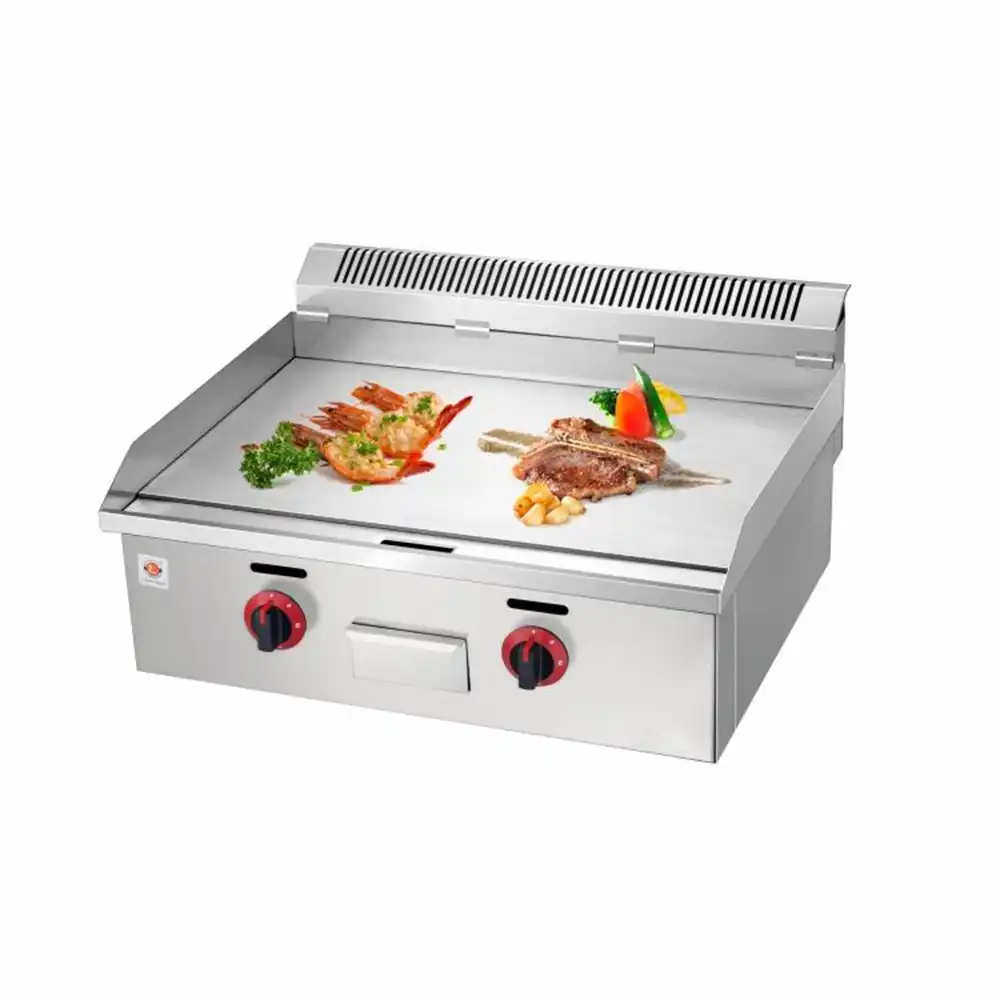
Global market projected to surpass $2.8 billion by 2034 as operators embrace induction heating, AI-powered automation, and ventless designs
The commercial griddle — a flat cooking surface long regarded as the workhorse of diners, fast-food chains, and food trucks — is undergoing a technological renaissance. Once a simple slab of steel heated by gas burners, today’s commercial griddle is increasingly becoming a smart, connected, and energy-efficient powerhouse that is reshaping how professional kitchens operate.
According to multiple industry analyses, the global commercial griddle market is experiencing robust growth. The market was valued at approximately US$1.3 billion in 2025 and is projected to reach US$1.7 billion by 2032, growing at a compound annual growth rate (CAGR) of 4.6%. Other forecasts are even more bullish: the Commercial Griddle Market is valued at US$1.61 billion in 2025 and is projected to grow at a CAGR of 6.5% to reach US$2.84 billion by 2034. The commercial griddle market is forecasted to grow by USD 534.7 million during 2024-2029, accelerating at a CAGR of 6.2%.
Regional Growth Drivers
North America remains the largest market, with the U.S. commercial griddle market estimated at US$393.8 million in 2025. However, the most dramatic growth is occurring in Asia-Pacific. China, the world’s second-largest economy, is forecast to reach a projected market size of US$431.7 million by 2032, trailing a CAGR of 8.6% — nearly double the global average.
Key players in the industry include Middleby Corporation, Star Manufacturing International, Vulcan Equipment (ITW Food Equipment Group), Electrolux Professional, Henny Penny Corporation, Ali Group, Hatco Corporation, and Garland Group (Welbilt Inc.).
The Technology Revolution
Several technological innovations are driving the market’s transformation:
Induction Heating Takes Center Stage
In April 2025, Hatco Corporation launched its Countertop Induction Griddle, a versatile solution that brings speed, consistency, and precision to commercial kitchens. The unit reaches 350°F (177°C) in just 12 minutes, features dual independently controlled heat zones with four temperature sensors each, and delivers a maximum temperature of 550°F (288°C). Unlike traditional induction units that require a pan, the cooktop itself serves as the cooking surface.
Induction technology is gaining traction for its exceptional energy efficiency. Industry sources note that a standard gas griddle wastes nearly 60 cents of every dollar spent on fuel, while induction commercial griddles retain 95 cents of value directly in the cooking process. Induction heating virtually eliminates heat radiation, ensuring a cooler and more comfortable kitchen environment.
Smart and Connected Griddles
Connectivity and digital HACCP logging are moving from nice-to-have to standard features, particularly in multi-site chains. Cloud-linked controllers record time and temperature data for HACCP compliance, push firmware and recipe updates, and flag anomalies. Multi-site dashboards benchmark energy usage and throughput, supporting corporate audits and sustainability reporting.
Middleby Corporation has developed an open kitchen IoT system that allows restaurant owners and operators to remotely monitor and manage commercial cooking equipment across multiple locations through an easy-to-use online dashboard. The smart griddle temperature control market is expected to grow at a CAGR of 10.7% from 2025 to 2033, driven by rising adoption of IoT-enabled temperature control solutions.
Clamshell and Compression Cooking
Clamshell griddles — featuring upper heated platens that cook food from both sides simultaneously — are transforming kitchen efficiency. AccuTemp’s XLR8 Upper Heated Platen technology claims to reduce cook times by 50% or more compared to standard flat-top griddles. Some manufacturers have introduced active compression systems that lock the platen at a specific thickness, ensuring consistent results across products of varying sizes.
The Alpha Grill, a clamshell griddle system launched in early 2026, combines advanced robotics, artificial intelligence, and smart cooking technology. It features a dual-sided griddle system capable of cooking up to eight patties at once — or 200 patties per hour. Once patties are placed on the griddle, they are automatically lifted and pressed against the heated top griddle, ensuring fast, even searing on both sides.
Ventless Solutions Expand Possibilities
Ventless griddle technology is opening new opportunities for operators in non-traditional locations. Evo America’s EVent Ventless Griddle integrates a high-efficiency electric griddle with a built-in ventilation system that extracts air across the cooking surface through a series of filters, removing smoke and grease particulates before exhausting clean air — eliminating the need for an overhead vent hood.
Scott Heim, President of Evo America and Middleby Ventless Solutions, explains: “Our unique circular flattop cooking grills are designed to create a social cooking experience”. Major grocery chains including HEB Grocery, Farm Boy, and Whole Foods are purchasing Evo equipment to offer fresh meal preparation directly to consumers in store. Ventless equipment features built-in filtration systems that remove grease, smoke, and odors without the need for ducted ventilation.
Energy Efficiency and Sustainability
Energy efficiency has emerged as a primary driver of commercial griddle adoption. Operators are increasingly demanding Energy Star-certified commercial griddles and models equipped with infrared burners. The growing focus on sustainability and operational cost reduction is fueling demand for energy-efficient cooking equipment.
Auto-standby and zone shutoff features reduce idle energy losses without sacrificing response during rush periods. Split-zone designs allow chefs to sear and gently finish on the same deck, maximizing versatility.
Case Study: Whole Beast Burger
The impact of modern griddle technology is perhaps best illustrated by real-world success stories. Whole Beast, an award-winning fast-food business, won the “Champion of Champions” title at the National Burger Awards 2024. Finalists were given Synergy’s electric griddles to cook on — and the experience proved transformative.
“We were selling a lot of burgers before, but as soon as we won the Champion of Champions and it got out into the press, more and more people started coming in. It has completely changed our business!” said Sam Bryant, founder of Whole Beast.
The brand had previously only used gas griddles. Swapping to Synergy’s electric alternative has used less energy, saved money, and minimized Whole Beast’s carbon footprint. “Above all, the Synergy griddle delivers consistency on demand. This means it produces a far superior product time-after-time,” Bryant added.
Market Outlook
The commercial griddle market is expected to continue its upward trajectory, driven by several key factors: chain remodeling, convenience retail foodservice expansion, and the growth of ghost and host-kitchen formats — all of which favor compact, modular, and programmable griddles that standardize outcomes across shifts and sites.
The proliferation of food trucks and pop-up restaurants has increased demand for compact and portable griddle models. Meanwhile, the shift toward open kitchen designs has influenced manufacturers to prioritize sleek designs and easy-to-clean surfaces.
As food culture evolves with an emphasis on consistency, speed, and hygiene, commercial griddles are increasingly viewed as essential kitchen tools in professional cooking environments, meeting both high-volume needs and culinary precision.
About the Commercial Griddle Market: Commercial griddles are heavy-duty flat cooking surfaces used in professional kitchens and foodservice operations, including restaurants, hotels, cafeterias, catering services, food trucks, institutional kitchens, and quick-service restaurants (QSRs). Available in gas, electric, and induction-heated models, they are used to prepare eggs, pancakes, burgers, grilled sandwiches, vegetables, seafood, and more.