
Countertop Fryers: Bringing Restaurant-Quality Crispness to Home Kitchens

When you bite into a piece of fried chicken, that golden, crispy crust shatters between your teeth, followed by the juicy, piping‑hot meat—an experience that is often hard to replicate at home. The secret may very well lie in a countertop fryer.
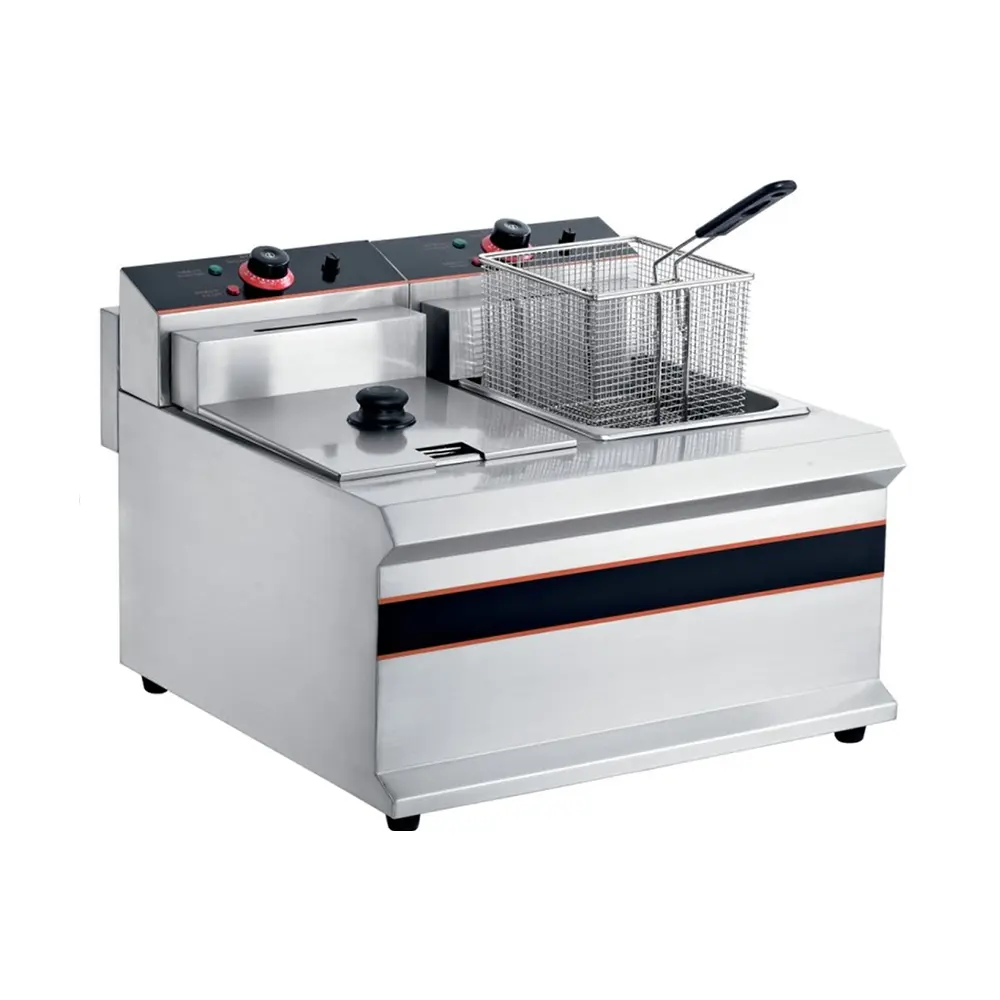
A countertop fryer is a standalone deep‑frying appliance designed to sit directly on your kitchen counter. It comes in electric and gas versions. Unlike traditional pan‑frying on a stovetop, it features a built‑in thermostatic control that precisely maintains oil temperature, ensuring every batch achieves consistent crispness. Over the past decade, I’ve fried countless batches of chicken, and I know that the gap between homemade and restaurant‑quality fried food almost always comes down to one key element—the fryer itself.
Why Choose a Countertop Fryer?
Before you decide to buy, ask yourself one question: Do you really need a dedicated fryer?
For someone who fries only occasionally, a heavy pot on the stovetop might suffice. But if you cook fried foods regularly, the situation is entirely different. Frying in a pot requires constant attention to the heat, and you have to adjust the temperature with every batch—it’s troublesome and inconsistent. Moreover, the oil is often discarded after each use, which is wasteful.
In contrast, countertop fryers offer clear advantages:
Precise temperature control – The built‑in thermostat maintains the set temperature steadily. The oil temperature does not drop drastically when cold food is added, so the food absorbs less oil and turns out crispier.
Higher efficiency and consistency – “Countertop fryers are best for repetitive, high‑volume cooking where consistency is critical,” notes food‑oil expert Josh Tuinstra. For frying multiple batches in succession, the benefits become even more apparent.
Oil cost savings – Many countertop fryers allow you to store oil inside the unit, and some models include filtration systems that extend the oil’s usable life.
How to Choose the Right Countertop Fryer
When selecting a countertop fryer, consider these key factors:
1. Capacity – How much can you fry at once?
Capacity is the primary consideration. Small domestic models with 1.2‑quart (about 1.1‑litre) oil tanks suit one or two people, while larger tanks of 5 litres or more can handle a full basket of chicken wings or onion rings in a single batch, eliminating the need to cook in stages. A larger oil volume has an additional hidden advantage: the temperature drops less when cold food is added, and it recovers faster.
For commercial use, capacity choices are even more critical. Some operators share their experience: a 15‑litre unit is suitable for small stalls doing 30‑50 orders per day—the oil layer is thick enough and heats up quickly; a 17‑litre model is better for continuous frying, offering a wider oil surface so food does not pile up and fries more evenly. Tests show that under the same power rating, a 17‑litre fryer maintains oil temperature within ±3°C after six consecutive batches, whereas a 15‑litre unit begins to lose temperature from the fourth batch onward.
Home fryers typically have capacities between 2 and 4 litres, while commercial countertop models can range from 6 litres up to 30‑pound oil capacities.
2. Power – Determines heating and recovery speed
Power affects how quickly the oil heats up and how fast it recovers after food is added. A 1200‑watt unit works for small snacks, but models with 1600 to 1800 watts deliver faster recovery and more even browning.
Testers who evaluated eight countertop fryers found that 1800W immersion heating elements performed exceptionally well in temperature recovery. In the commercial arena, gas countertop fryers are rated in BTUs, with high‑end units reaching 70,000 BTU to handle peak‑hour demand.
3. Materials and ease of cleaning
Stainless‑steel bodies with enamel‑coated oil tanks resist rust and are easy to clean. Many commercial‑grade countertop fryers feature removable tanks and hinged heating elements, greatly simplifying daily cleaning.
4. Temperature control and safety features
Adjustable thermostats should reach at least 375°F (about 190°C). Desirable safety extras include: magnetic power cords (which detach if pulled), automatic overheat shut‑off, and non‑slip feet.
Home vs. Commercial – What’s the Difference?
Countertop fryers fall into home and commercial categories, and the fundamental difference lies in usage intensity and duty cycle.
Home countertop fryers are generally smaller (2‑4 litres), lower in power, and designed for occasional family meals. Their aesthetics often blend better with kitchen décor, and they are more affordable.
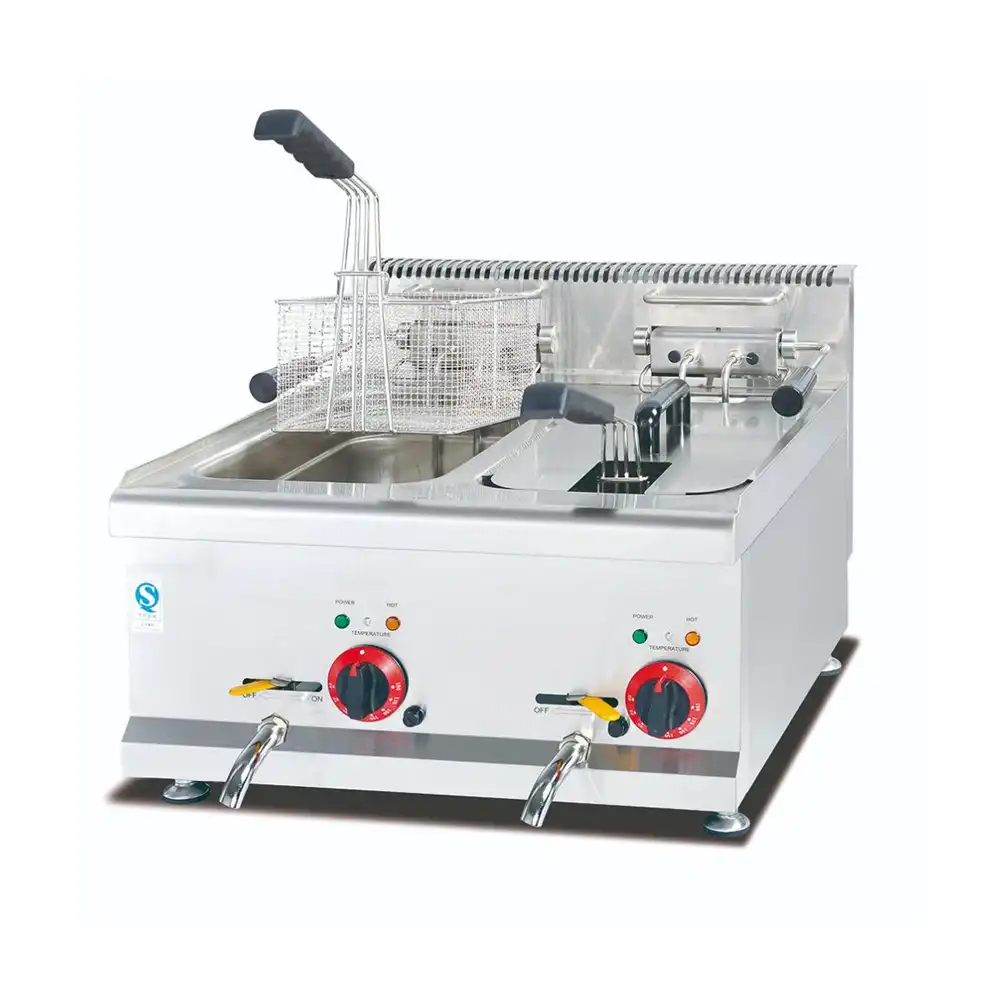
Commercial countertop fryers are a different story. They use thicker stainless steel, more powerful heating systems, and more sophisticated temperature controls. Capacities range from 6 litres to 30 pounds of oil, and they support continuous high‑intensity operation for hours. In the food‑service industry, a 10‑pound countertop fryer can allow a small restaurant to add fried items with a low initial investment. Industry observations suggest that merely offering french fries plus one rotating snack item can increase the average ticket by 10‑20%.
Interestingly, a recent trend has emerged: many home users are now buying “commercial‑grade” small countertop fryers to obtain more stable frying results. This “downgrade consumption” reflects a growing consumer pursuit of cooking quality.
Countertop Fryer vs. Air Fryer – Not a Replacement
The popularity of air fryers has led many to believe that they can completely replace traditional deep frying. That is not the case.
An air fryer is essentially a small convection oven with a powerful fan; it uses hot air to “bake” a crispy coating, rather than truly frying. For foods like french fries, fried clams, or tempura, the results of genuine deep frying are unattainable with an air fryer.
The advantages of air fryers are less oil and lower calories. The advantage of countertop fryers is purity of texture—the unique flavour and crispiness produced by the Maillard reaction at high oil temperatures cannot be perfectly replicated by any alternative.
These two appliances are not opposites; they serve different needs. Choose an air fryer for health and convenience, and choose a countertop fryer for the ultimate mouthfeel.
Usage and Maintenance Tips
Once you own a countertop fryer, proper use and maintenance habits will significantly extend both the appliance’s and the oil’s lifespan:
Safety first – Place the fryer on a stable, heat‑resistant counter. Keep the oil level between the MIN and MAX marks. Never run it dry. Do not let the power cord hang over the counter edge.
Control food moisture – Remove excess surface moisture from food before frying, otherwise it will cause violent splattering and excessive foaming.
Regular oil filtration – Remove food debris from the bottom of the tank after each use. Periodic oil filtration can dramatically prolong oil life. In commercial settings, filter at least once a day.
Timely oil replacement – Home‑fryer oil typically needs changing after 8 to 12 uses. As oil is used repeatedly, its flash point gradually decreases—meaning it becomes more prone to catching fire.
Thorough cleaning – Wait until the oil has cooled to a safe temperature before handling it. Wash removable parts with warm soapy water, wipe the exterior with a damp cloth, and never immerse the entire unit in water.
Conclusion
Countertop fryers bring restaurant‑level crispness within reach of home cooks. Whether you’re frying a batch of golden fries for a family gathering or running a small food stall that demands consistent, high‑volume output, choosing the right countertop fryer makes frying simple, stable, and delicious. As one seasoned user put it: “Countertop fryers are best for those who need repetitive, high‑volume cooking where consistency is paramount.” If you love fried foods, it is certainly worth reserving a spot on your kitchen counter.