
Countertop Fryers: Bringing Restaurant-Quality Crispness to Home Kitchens

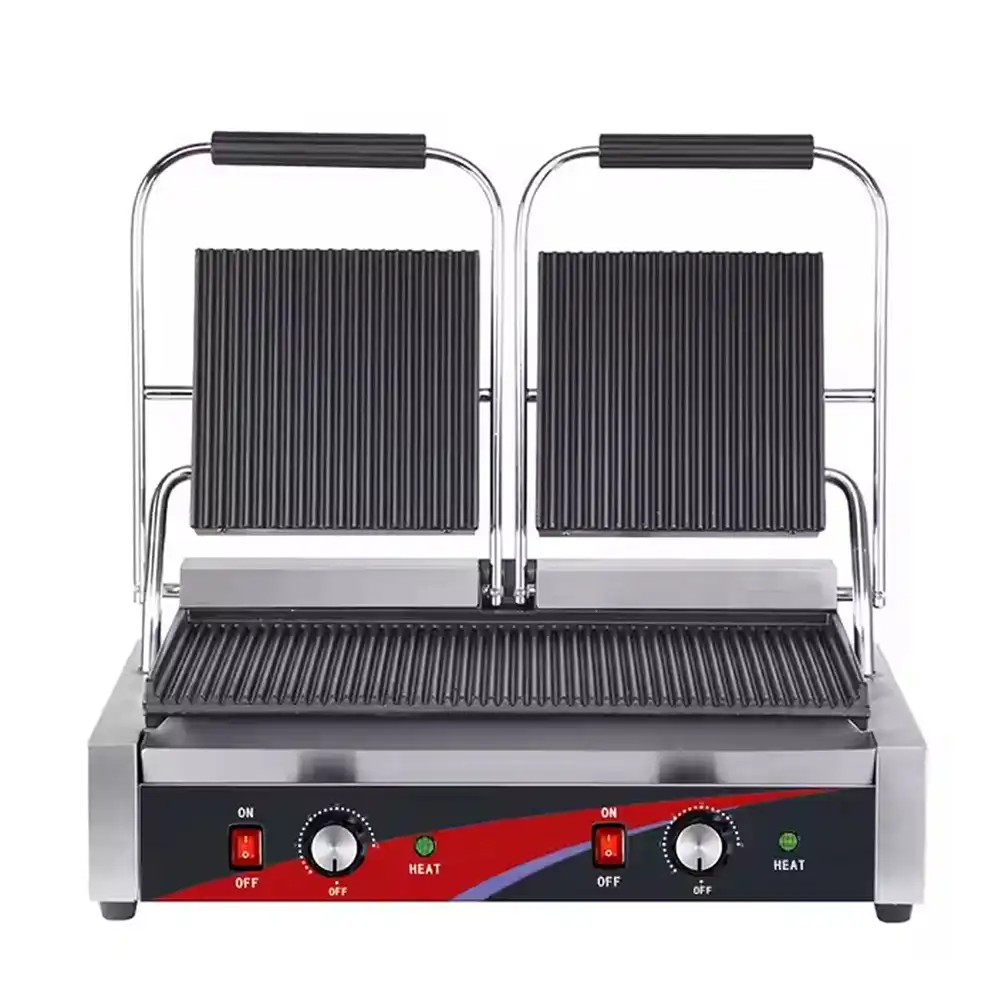
Global market projected to reach $3.5 billion by 2035 as double-sided cooking gains traction across foodservice and residential sectors
The contact grill—a cooking appliance that applies heat simultaneously from both a heated lower surface and a hinged upper platen—has emerged as one of the most transformative pieces of cooking equipment in both commercial and residential kitchens. Also known as a clamshell grill, double-sided grill, or panini press, this versatile appliance is redefining how operators and home cooks approach grilling, toasting, and searing.
Unlike traditional grills that cook food from one side and require manual flipping, contact grills eliminate the need for flipping entirely. The upper platen lowers onto the food, cooking it from the top and bottom at the same time, resulting in dramatically faster cook times and consistent results batch after batch.
A Market on the Rise
The contact grill market is experiencing robust growth. According to industry analysts, the global Contact Grill Market was valued at $2,128.7 million in 2024 and is expected to grow from $2,226.6 million in 2025 to $3,500 million by 2035, representing a compound annual growth rate (CAGR) of approximately 4.6%. The broader electric grill market—which includes contact grills as a key segment—was valued at $4.73 billion in 2025 and is projected to reach $6.92 billion by 2032, growing at a CAGR of 5.57%.
North America and Europe currently lead the market, attributed to high usage of electric grilling appliances and a growing trend toward indoor grilling. The Asia-Pacific region is witnessing rapid expansion due to rising disposable incomes and urbanization. Key players in the market include Cuisinart, George Foreman, Hamilton Beach, Breville, Tefal, Panasonic, and Smeg.
What Is a Contact Grill?
A contact grill—also called a two-sided grill, double-sided grill, or clamshell grill—is a cooking appliance that applies heat simultaneously from both a heated lower surface and a hinged upper platen. The name “clamshell” comes from the way the upper platen opens and closes like a clamshell.
The primary difference between a traditional grill and a contact grill lies in their cooking methods. A traditional grill cooks food from one side, usually the bottom, and requires manual flipping for even cooking. In contrast, a commercial contact grill cooks food from both the top and bottom simultaneously. This feature not only speeds up the cooking process but also provides consistent results, as the top and bottom plates apply even pressure on the food, promoting uniformity in cooking.
Contact grills are often referred to as panini presses, but their capabilities extend far beyond sandwiches. They can handle burgers, steaks, sausages, bacon, eggs, fish, vegetables, and of course, toasted sandwiches and paninis. The variety of foods that can be cooked makes them an invaluable tool for establishments that value efficiency and versatility.
The Technology Behind the Grill
Plate Materials
Contact grill plates are manufactured from several materials, each with distinct advantages:
Cast Iron is ideal for continuous use, offering even heat distribution and retention. When seasoned, it produces a natural non-stick finish. While more expensive and slower to heat up, cast iron is favored for its durability and traditional cooking appeal.
Aluminum is best for occasional use, featuring rapid heat-up and recovery times. It is generally more affordable than cast iron, though it may cool more quickly.
Vitro Ceramic/Glass Ceramic offers the benefits of both aluminum and cast iron. These smooth glass plates provide direct heat transfer, promote even cooking, and are exceptionally easy to clean. Vitro ceramic infrared technology can reach 230°C in just 90 seconds, cutting energy consumption by up to 50% compared to traditional grills.
Stainless Steel leads in preference due to its durability and easy maintenance.
Flat vs. Ribbed Plates
The choice between flat and ribbed plates depends on the desired cooking outcome:
Flat plates maximize surface contact—every millimeter of the food touches the plate, resulting in faster, more even cooking and a clean, uniform finish. These are the right choice for panini grills.
Ribbed plates create the raised sear lines that customers associate with grilled meat and vegetables. The channels between the grooves drain away fat or grease effectively, offering a healthier option when grilling meat.
Many modern contact grills offer mixed configurations—ribbed top and bottom plates, flat top and bottom plates, or mixed flat/ribbed setups—allowing chefs to choose the ideal surface for each menu item.
Efficiency That Transforms Operations
Speed That Cuts Cook Times in Half
The most immediate benefit of contact grilling is speed. By cooking from both the top and bottom simultaneously, contact grills cut cooking times in half compared to traditional grilling. Some manufacturers report cook time reductions of 40-60% compared to single-sided grilling.
Taylor’s L-Series clamshell grills, for example, deliver cook speeds up to 66% faster than traditional flat tops. This dramatic improvement in throughput can transform a kitchen’s capacity during peak service hours.
Energy Efficiency
Energy efficiency has become a primary focus in contact grill design. Vitro ceramic infrared heating systems can reduce energy consumption by up to 50% compared to standard grills. Advanced models feature ECO functions that reduce power consumption during periods of lower activity.
Dual-zone models with independent temperature controls allow operators to power down one side during off-peak periods, further reducing energy consumption. Some grills offer multiple operating modes—both plates, bottom plate only, or standby—enabling significant energy savings during quieter periods without sacrificing performance.
High thermal insulation minimizes energy consumption during standby cycles, keeping the grill ready for any request without sacrificing efficiency.
Consistency and Labor Savings
Contact grills deliver programmed, repeatable results every time—regardless of who is running the grill. This consistency is particularly valuable in multi-unit operations where standardization is critical.
The labor savings are equally significant. With preset cooking programs, operators simply touch a button to start a cycle. The automatic opening and closing function frees staff from constant supervision, while adjustable audible alarms signal when food is perfectly cooked. The automatic lift function, which raises the top plate when cooking is complete, minimizes the risk of overcooked products.
Advanced Features Reshaping the Category
Smart and Programmable Controls
Modern contact grills are increasingly equipped with sophisticated controls. Taylor’s L-Series models feature programmable cooking controls, independent cooking zones, automatic platen gapping, and rapid heat recovery systems. Some models can store up to 75 pre-programmed menu items.
Premium models increasingly offer multifunctionality, combining grill, griddle, air-fry, and panini capabilities in a single unit. Breville announced in March 2025 a strategic partnership with Panasonic to co-develop connected kitchen grills, aiming to accelerate smart features and cross-brand software capabilities. Panasonic launched in May 2025 a flagship 2-in-1 contact grill with app-based cooking guidance and voice control.
Flexible Configurations
The Prince Castle NCG9 Flat MultiFlex Contact Grill exemplifies the trend toward versatility. It easily switches between a fully flat griddle and a top-heated contact grill. With the ‘top heater off’ mode, the unit becomes a flat-surface griddle for traditional cooking. When the top heater is engaged, it excels at delivering fast, even cooking—ideal for paninis, BLTs, grilled cheese sandwiches, and similar menu items.
Independent temperature control for top and bottom plates provides enhanced precision. The top plates are precisely aligned parallel to the bottom plate, ensuring even pressure and reliable cooking results, particularly for thicker or layered sandwiches.
Self-Leveling and Adaptive Design
Advanced clamshell designs feature self-leveling capabilities that accommodate items up to three inches thick as well as large quantities of smaller items, all with consistent contact and heating. Each clamshell utilizes individual control boxes for independent electronic temperature control.
Applications Across the Foodservice Landscape
Contact grills have found homes across virtually every segment of the foodservice industry:
Cafés and coffee shops rely on contact grills for paninis, toasted sandwiches, and grilled panini-style breakfast items.
Quick-service restaurants use them for burgers, chicken sandwiches, and breakfast items where speed and consistency are paramount.
Food trucks value their compact footprint and rapid cooking capabilities.
Hotels and catering operations appreciate their versatility and ability to handle high volumes.
The compact countertop footprint is particularly valuable in smaller prep lines, while heavier-duty builds support continuous use in busy kitchens.
Contact Grill vs. Flat Top: A Critical Distinction
For operators deciding between a contact grill and a traditional flat top, the comparison is illuminating:
| Feature | Contact Grill | Traditional Flat Top |
|---|---|---|
| Cooking method | Top and bottom simultaneously | Bottom only—requires flipping |
| Cook speed | Up to 66% faster | Standard cook times |
| Consistency | Programmed, repeatable | Dependent on operator skill |
| Labor required | Minimal—one touch to start | Constant attention and flipping |
| Training time | Short—preset programs do the work | Longer—technique-dependent |
| Heat distribution | Even—both sides controlled independently | Can create hot and cold spots |
The flat top remains excellent for cooking pancakes, eggs, and certain breakfast items where technique and texture variation are part of the experience. But for operations where speed, consistency, and throughput are the priority, the contact grill delivers superior performance.
The Future of Contact Grilling
Several key trends are shaping the future of the contact grill market:
Multifunctionality is driving consumer demand for versatile cooking appliances. SMEG has launched the ‘Multi Use Grill,’ combining contact grilling, oven baking, and open BBQ functions in one compact unit.
Smart technology integration is accelerating. Digital controls, voice control, smartphone integration, and recipe-driven automation are turning grills into connected kitchen assets.
Energy efficiency continues to improve. Manufacturers are investing in energy-efficient heating elements and digital controls that enhance user convenience and functionality.
Health-conscious design is increasingly important. Smokeless and low-odor technologies are improving indoor usability, while non-stick surfaces and grease-draining channels support healthier cooking.
Customization is on the rise. The bespoke contact grill marketplace is thriving as demand for personalized cooking solutions grows, with tailored griddles featuring advanced heating tech, health-aware designs, and smart control systems.
Conclusion
The contact grill has evolved from a simple sandwich press into a sophisticated, versatile cooking platform that is transforming how commercial kitchens and home cooks approach grilling. With cook times cut by up to 66%, energy consumption reduced by up to 50%, and programmable consistency that eliminates guesswork, contact grills deliver measurable operational improvements while expanding menu possibilities.
As the market continues its steady growth toward $3.5 billion by 2035, the contact grill’s trajectory is clear: smarter, more efficient, more versatile, and more essential to modern cooking than ever before. Whether in a fast-food kitchen processing hundreds of burgers per hour or a home kitchen preparing a weekend breakfast, the contact grill has earned its place as an indispensable cooking tool.